Deck materials
Pressure-treated, Trex® composite, and PVC decks.
A plain-language guide to the four decking materials Max Built installs for homeowners in Oswego, Aurora, and the surrounding suburbs — with honest trade-offs and a relative budget level for each.
How to choose
Pick by maintenance tolerance first, budget second.
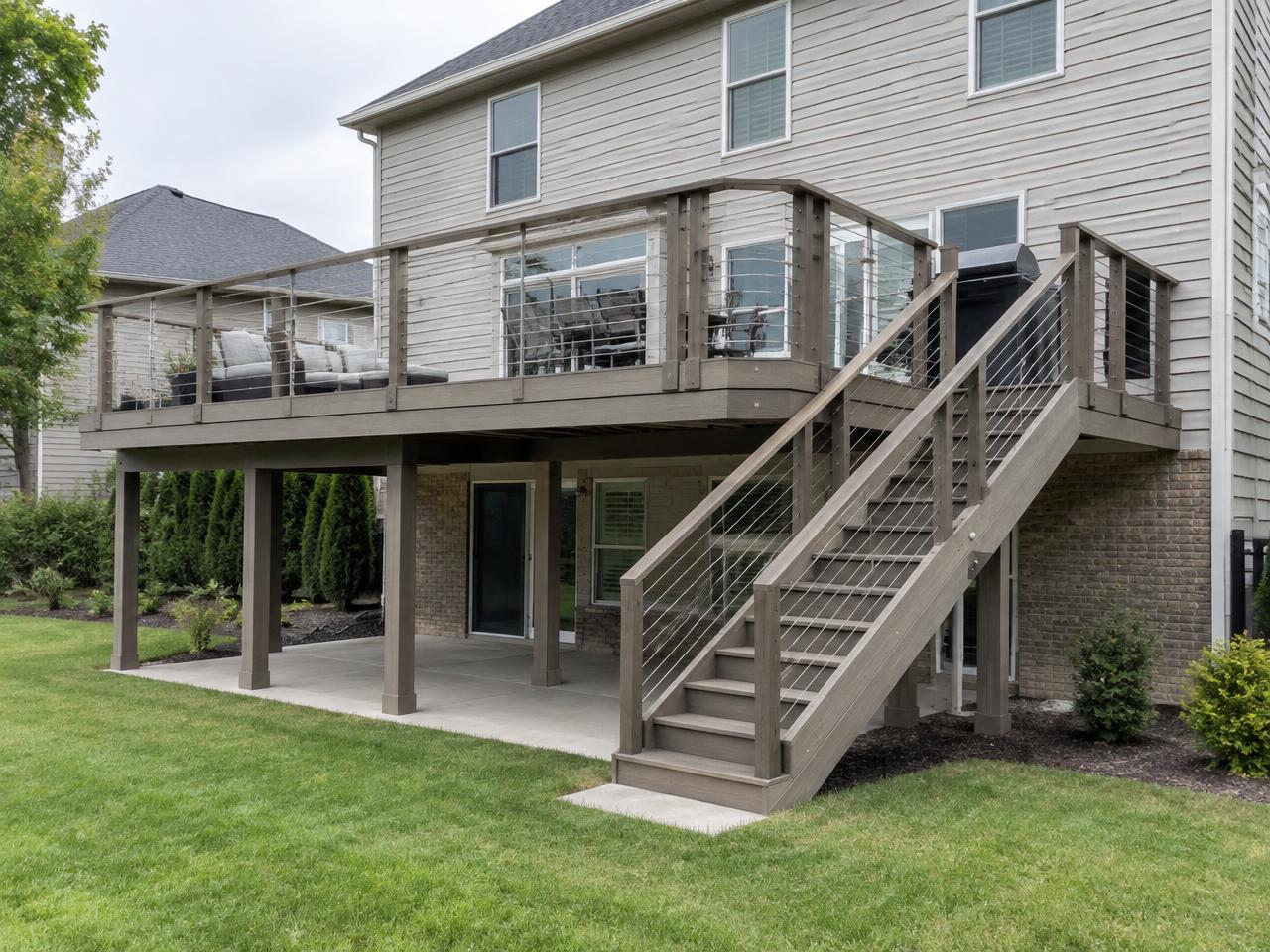
Pressure-treated wood costs the least upfront but needs regular staining or sealing. Trex Enhance® gives you low-maintenance composite at a mid-range budget. Trex Transcend® adds deeper color, a tougher cap, and a longer manufacturer warranty. PVC decking contains no wood fiber, so it's the most moisture-resistant and lowest-maintenance option, at a premium price.
Not sure? Request a quote and choose "help me compare" — we'll bring samples to the on-site visit.
Entry budget
$$$$Pressure-Treated Wood
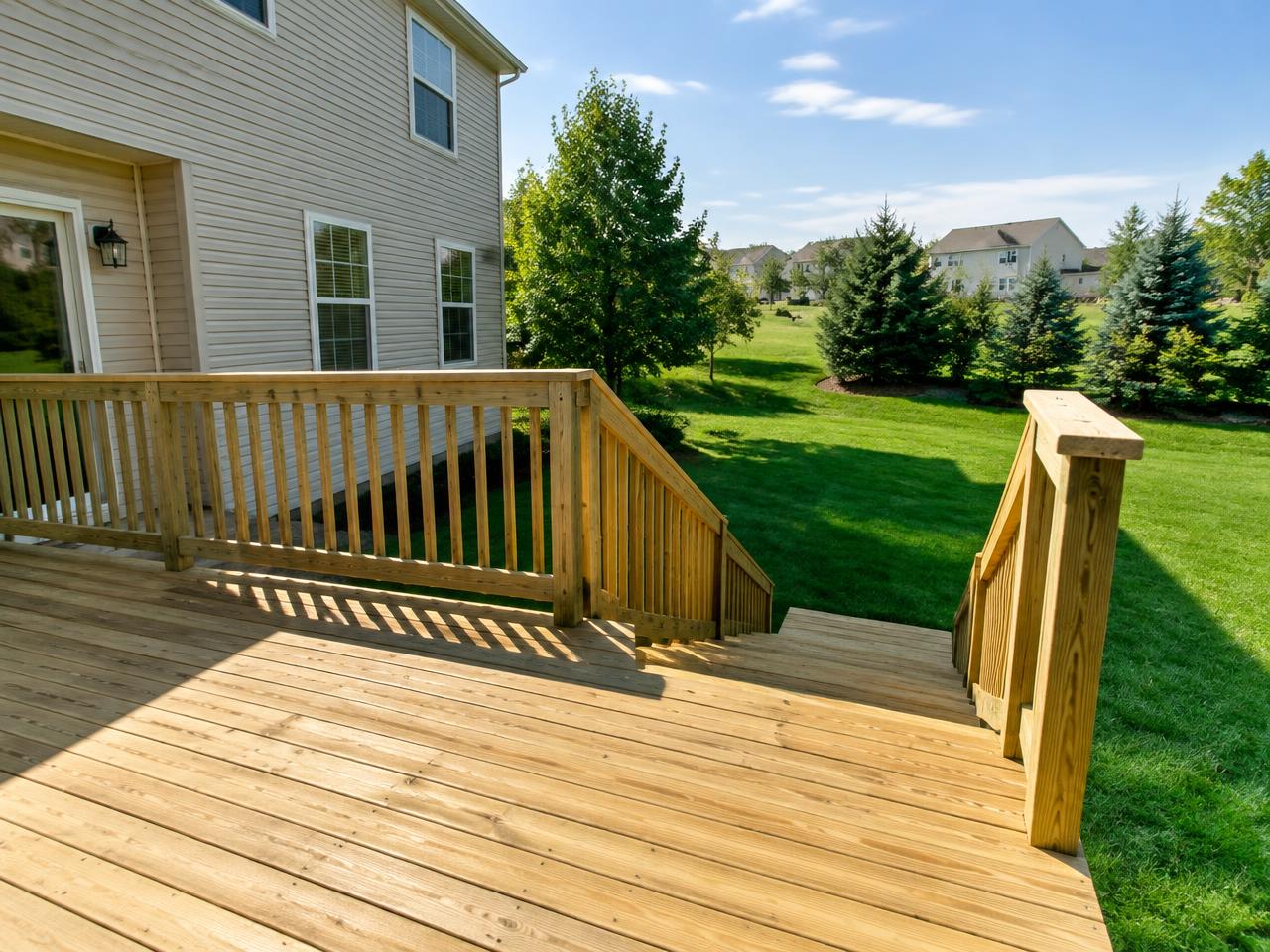
Real wood decking treated to resist rot and insects. The most affordable way to build a full-size deck.
- Appearance
- Natural pine grain with a green-to-honey tone when new. Can be stained or sealed in many colors, and weathers to gray if left untreated.
- Maintenance
- Highest ongoing maintenance of the four options. Expect periodic cleaning plus staining or sealing every couple of years to keep it looking its best.
Advantages
- Lowest upfront material cost
- Widely available and easy to repair
- Can be stained to match your home
- Familiar, traditional look
Considerations
- Requires regular staining or sealing
- Boards can check, splinter, or cup over time
- Color changes as it weathers
Best suited for
Homeowners who want the most deck for the budget, don't mind seasonal upkeep, or plan to sell in the next several years.
Mid budget
$$$$Trex Enhance®
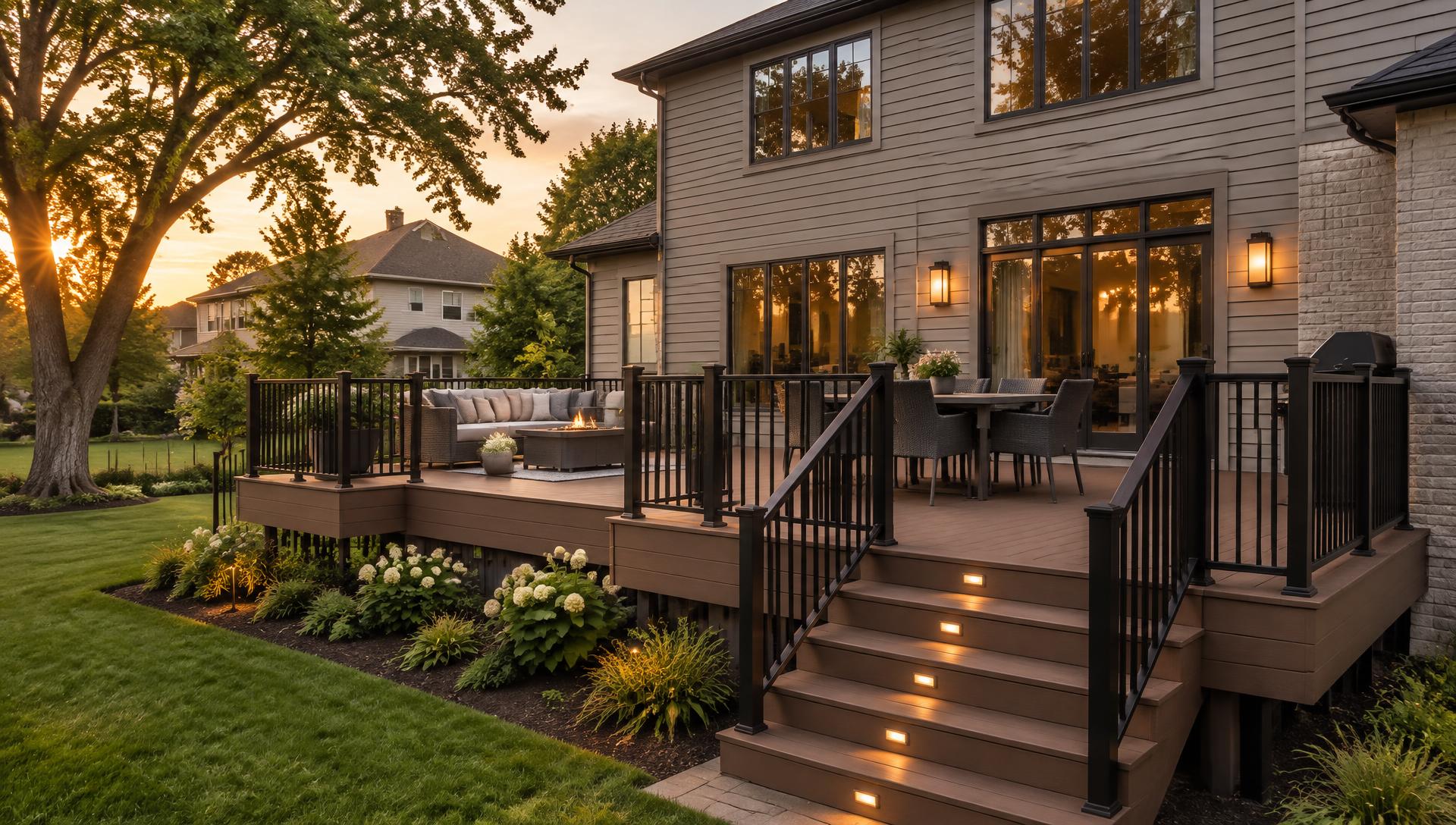
Trex's entry-level composite line. Capped boards resist fading and staining with far less upkeep than wood.
- Appearance
- Solid earth tones and select multi-tonal colors with a low-sheen wood-grain texture. A clean, modern look without the price of premium composite.
- Maintenance
- Low. Occasional soap-and-water cleaning. No sanding, staining, or sealing.
Advantages
- Composite durability at an approachable price
- Resists fading, staining, and mold on the capped surface
- Lighter scalloped boards make handling easier
- Backed by a manufacturer limited warranty (see Trex for terms)
Considerations
- Smaller color palette than Transcend
- Scalloped profile means fewer edge/trim options
- Composite can feel warmer underfoot in full sun
Best suited for
Families who want to stop staining their deck without stretching to premium composite pricing.
Premium budget
$$$$Trex Transcend®
Trex's flagship composite line with deeper, more varied color and a high-performance shell built to hold its look for decades.
- Appearance
- Rich multi-tonal streaking and a realistic hardwood grain. A wide palette from warm browns to cool grays, with matching fascia and trim.
- Maintenance
- Low. Soap and water. The premium cap is designed to hold color and resist scratches better than entry lines.
Advantages
- Best-in-line color depth and grain realism
- Excellent fade, stain, and scratch resistance
- Full-profile boards with trim and fascia options
- Longer manufacturer limited warranty than Enhance (see Trex for terms)
Considerations
- Higher material cost than Enhance
- Heavier boards; may add labor on large or elevated builds
- Darker colors run warmer in direct sun
Best suited for
Homeowners planning a long-term outdoor living space who want the richest look with minimal upkeep.
Premium budget
$$$$PVC Decking
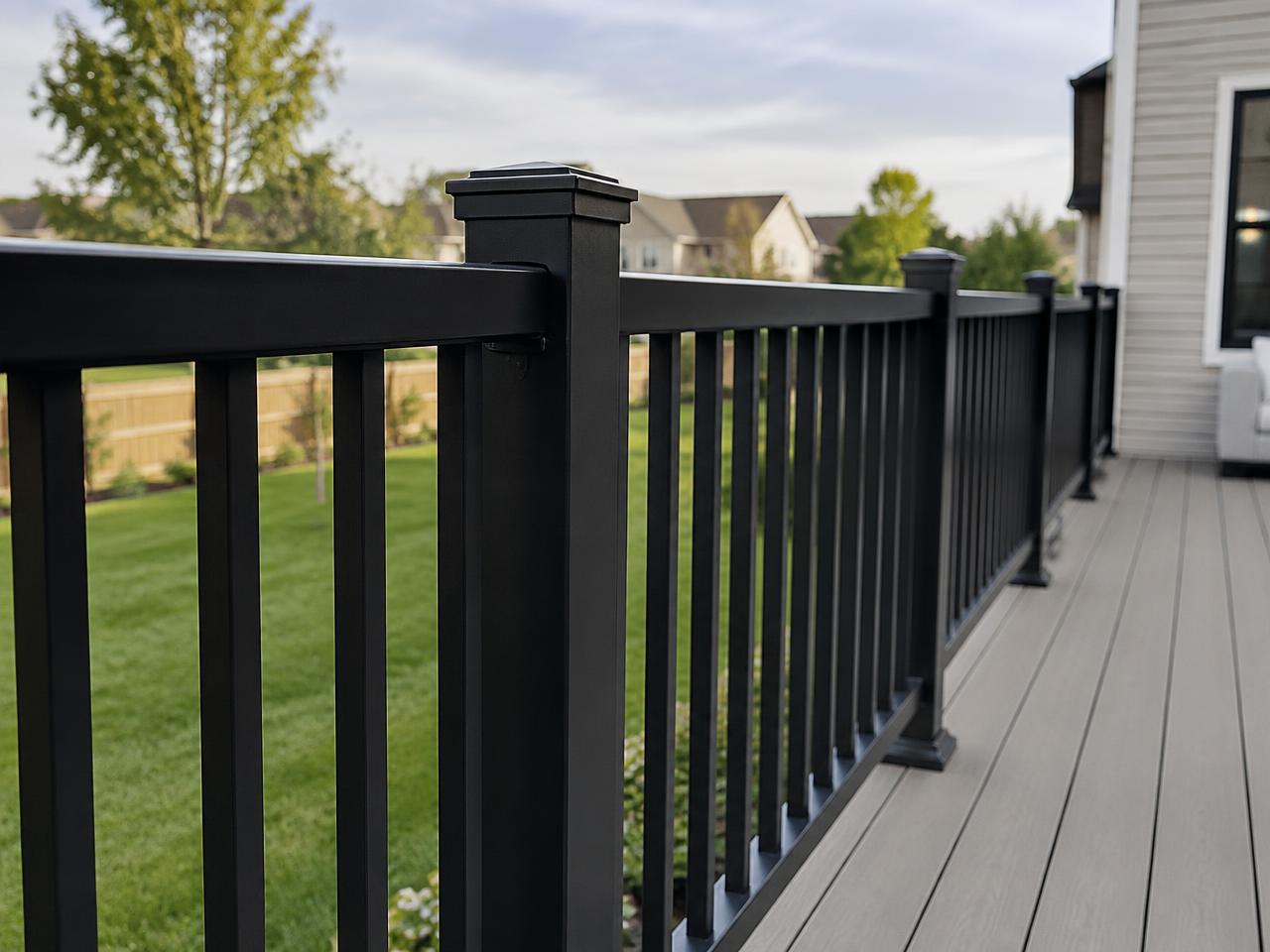
Fully synthetic boards with no wood fiber. Extremely resistant to moisture, mold, and staining, and typically cooler and lighter than composite.
- Appearance
- Available in clean solid colors and realistic wood-look finishes. Some lines offer very light shades that composites can't match.
- Maintenance
- Lowest of the group. Rinse and go. No wood content means nothing to absorb water.
Advantages
- No wood fibers to absorb moisture or grow mold
- Lighter weight than composite
- Often runs cooler underfoot, especially lighter colors
- Excellent choice around pools and hot tubs
Considerations
- Among the highest material costs
- Can expand and contract more with temperature swings
- Some finishes look less like natural wood
Best suited for
Poolside decks, shaded damp yards, or anyone who wants the least maintenance possible.
Side by side
Deck material comparison.
Relative indicators only. Actual pricing depends on size, framing, railing, stairs, and site conditions.
| Feature | Pressure-Treated Wood | Trex Enhance® | Trex Transcend® | PVC Decking |
|---|---|---|---|---|
| Relative budget | $ | $$ | $$$ | $$$ |
| Maintenance | High — stain/seal | Low | Low | Lowest |
| Look | Natural wood grain | Solid & select multi-tone | Rich multi-tonal grain | Solid & wood-look |
| Fade & stain resistance | Depends on sealing | Good | Very good | Very good |
| Moisture resistance | Treated, still wood | Good | Good | Excellent — no wood fiber |
| Weight | Moderate | Lighter (scalloped) | Heavier | Lightest |
| Typical fit | Budget-first builds | Low-maintenance value | Long-term premium | Pools, damp yards, minimal upkeep |
Trex®, Trex Enhance®, and Trex Transcend® are registered trademarks of Trex Company, Inc. Warranty terms are set by the manufacturer.
Questions & answers
Deck material questions
Still deciding between materials?
Request a quote and we'll bring samples to your on-site visit so you can see and feel the difference.